
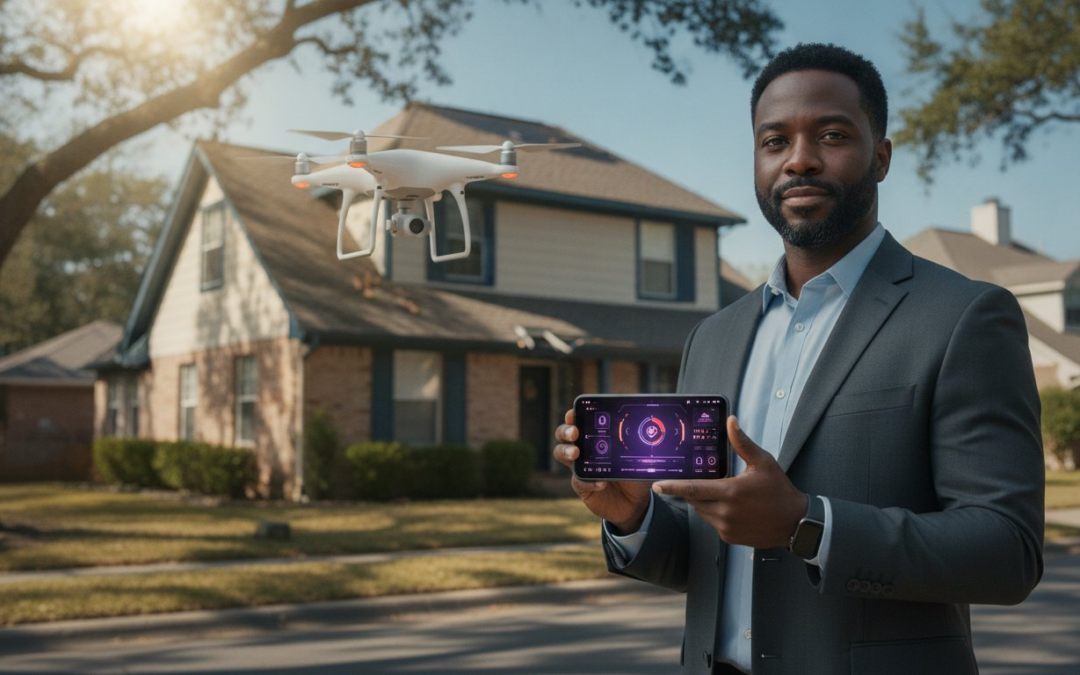
A single adjuster using a drone can now assess up to 12 properties per day; that is three times the capacity of traditional manual methods. If you are still climbing ladders and manually labeling every photo in Xactimate at 10 PM, you are leaving thousands of dollars on the table. You deserve a workflow that works as hard as you do. We understand the frustration of disjointed devices and the exhausting “second shift” of nighttime documentation that keeps you from your family and your rest. It is time to stop the grind and start closing.
It is time to eliminate the chaos and restore order to your onsite inspections. This guide reveals the essential time-saving tools for independent adjusters that are defining the industry in 2026. You will discover how to leverage automated photo labeling, instant report generation, and high-resolution 3D modeling to finish your work while still on the job site. We will explore the specific software and hardware that allow you to increase your daily claim capacity by 30-40% while producing professional, carrier-ready reports instantly. Inspect. Document. Deliver. Get ready to transform your field routine into a high-velocity success engine!
Key Takeaways
- Break free from the documentation trap by eliminating the manual “night shift” that leads to burnout and costly reporting errors.
- Build a high-performance 2026 toolkit that positions your smartphone as the central hub for all your essential time-saving tools for independent adjusters.
- Swap manual data entry for real-time voice-to-text labeling and template-driven documentation to slash your onsite inspection time.
- Implement a five-step field-to-final-report workflow designed to help you deliver carrier-ready files before you even leave the property.
- Leverage an integrated inspection ecosystem to maximize your daily volume and restore order to your chaotic documentation process!
The Documentation Trap: Why Traditional Claim Handling is Failing Adjusters
The sun goes down, but your workday is just beginning. This is the documentation trap. You’ve spent eight hours on wind-whipped roofs and in cramped crawlspaces, only to spend another four hours tethered to a laptop in your hotel room. For a modern independent adjuster, this “second shift” is the silent killer of profitability. It turns a successful day of inspections into a midnight marathon of file transfers, photo sorting, and repetitive typing. In 2026, the industry has no patience for these delays. Carriers demand shorter cycle times. Policyholders expect instant updates. Your revenue depends entirely on how many files you can close, not how many photos you can take.
Traditional claim handling is failing because it treats documentation as a separate, post-inspection event. This disjointed workflow creates a lag that hurts everyone involved. When you wait until the end of the day to organize your files, details get fuzzy and errors creep in. You lose the “eyes-on” accuracy that only exists while you are standing in the loss location. The solution is a fundamental shift from merely “capturing data” to “executing documentation” in real-time. You need a process that allows you to work once and finish forever.
The Hidden Costs of Manual Photo Labeling
Let’s do the math. A standard residential claim often requires 200 photos to document the risk and the damage properly. If you spend just 30 seconds per photo to sort, upload, and label it in Xactimate, you’ve burned nearly two hours on a single claim. Multiply that by five claims a day. You are now looking at a 10-hour work week spent solely on photo descriptions. This is the documentation bottleneck; it is the primary barrier to scaling your business and the fastest way to ruin your reputation with carriers. Slow reporting leads to lower deployment priority. If you can’t deliver the data fast, you won’t get the next assignment.
Why Better Hardware Isn’t the Only Answer
Many adjusters think a faster drone or a higher-resolution camera is the ultimate solution. It’s not. In fact, advanced hardware often makes the problem worse by creating more data that you eventually have to manage. High-end tools produce massive files, but they don’t organize themselves. You need a software bridge that connects the physical job site to the final estimate in real-time. The goal is a total shift in mindset. You must move from messy field notes to instant, carrier-ready reports. By utilizing the right time-saving tools for independent adjusters, you ensure that your hardware actually works for you instead of creating more work. Don’t just collect evidence. Close the file. Finish the report. Go home!
The 2026 Essential Adjuster Toolkit: Hardware Meets Software
Your gear is only as good as the time it saves you. In 2026, the best time-saving tools for independent adjusters aren’t just standalone gadgets; they are parts of a connected ecosystem. Your smartphone is no longer just a phone. It’s the central hub for every piece of data you collect. From drone feeds to thermal images, everything must flow through one device to eliminate the “second shift” of documentation. If your hardware doesn’t talk to your software, you’re working too hard.
The Bureau of Labor Statistics highlights that technology is automating some of the tasks that used to take hours of manual labor. This automation allows you to focus on high-level assessment rather than data entry. When choosing hardware, prioritize devices that support instant wireless transfer. If you have to plug in a cable or swap an SD card at the end of the day, you’re losing money. Invest in rugged, weather-sealed equipment that survives national deployments and back-to-back catastrophes. Reliability is your best friend when you’re 500 miles from home.
Visual Documentation Tools: Drones and Digital Cameras
Stop climbing every roof. A drone like the DJI Mini series allows you to inspect 8 to 12 properties per day, compared to just 3 or 4 using a ladder. While traditional DSLRs offer great quality, they often create a documentation lag. Use 360-degree cameras for interior losses to create immersive virtual tours in minutes. This level of detail prevents supplements and proves the loss instantly. Ensure your mobile app handles these high-resolution files without lag or crashing. Capture the proof. Confirm the damage. Close the file!
Measurement and Inspection Tech
Precision is non-negotiable. Laser measurers are perfect for interior rooms, but for complex exteriors, aerial measurement software is the gold standard. Use moisture meters and thermal imagers to find hidden damage that the naked eye misses. These tools add professional depth to your reports and justify your findings to the carrier. The real magic happens when these tools sync directly with your inspection management platform. To truly maximize your field efficiency, you need a central platform like a dedicated photo organization app to manage your visual evidence in real-time. Sync. Simplify. Succeed.
Automated Photo Labeling vs. Manual Entry: A Time Study
The difference between a profitable deployment and a burnout-inducing disaster often comes down to the seconds spent between every shutter click. Manual entry is a linear, exhausting grind. You capture the image, transfer the file, sort the folder, type the label, and finally upload the report. This five-step process is the primary reason adjusters struggle to scale. By the time you reach the labeling phase at your desk, the physical context of the loss is gone. You are left squinting at dozens of similar-looking shingles, trying to remember which slope had the hail hit. This is why time-saving tools for independent adjusters are no longer optional. They are the engine of your business.
Automation flips the script. It moves the documentation work to the job site where the information is fresh and the evidence is right in front of you. Instead of a post-inspection “second shift,” you execute the report in real-time. This isn’t just about moving faster; it’s about being more accurate. AI-assisted labeling ensures that every photo is identified correctly the first time, virtually eliminating the carrier kickbacks and revisions that haunt manual workflows. Capture. Organize. Deliver!
How Voice-to-Text Labeling Works in the Field
Forget your clipboard and your scribbled notes. In 2026, voice-to-text technology has evolved to handle the toughest field conditions. Modern systems utilize advanced noise-canceling algorithms that filter out high-velocity wind and background sirens, focusing purely on your voice. It understands industry-specific jargon like “R-38 insulation” or “oxidized aluminum” without blinking. These voice labels are baked directly into the photo metadata. When you sync your files with Xactimate, the descriptions are already populated. Speak. Snap. Sync! This eliminates the need for manual typing and keeps your eyes on the property, not a screen.
Template-Driven Documentation
Standardization is the key to speed. Custom inspection templates act as your digital checklist, ensuring you never have to double-back for a missed photo. You can choose a room-by-room flow for interior losses or a category-based approach for large-scale exterior damage. These templates do more than organize; they professionalize your output.
- Consistency: Every report follows the same logical flow for easier carrier audits.
- Scalability: New adjusters can follow pre-set templates to maintain quality.
- Efficiency: Automated sorting places photos in the right folders instantly.
Data shows that comprehensive documentation can reduce your claim cycle time by an average of 7 to 10 days. By decreasing the frequency of supplements by 40 to 50%, automated labeling pays for itself in a single deployment. You aren’t just saving time; you are protecting your reputation. Finish the claim. Close the file. Go home!
5 Steps to Streamline Your Field-to-Final-Report Workflow
Speed in the field isn’t about how fast you drive between losses. It is about how little work you bring home with you. By integrating time-saving tools for independent adjusters into a rigid, five-step process, you can transform your smartphone into a mobile claims office. This workflow eliminates the “second shift” and ensures your documentation is accurate while the damage is still right in front of your eyes. Follow these steps to maximize your daily volume and your revenue.
- Step 1: Pre-load claim data. Before you arrive, sync your mobile workspace with Xactanalysis. Pull the claim numbers and policyholder info into your custom templates so you are ready to go the moment you step out of the truck.
- Step 2: Execute the walk-through. Perform your inspection using real-time voice labeling. Describe the damage as you snap the photo. This bakes the data directly into the file.
- Step 3: Capture measurements. Use integrated aerial tools for roofs and walls. As established, this allows you to assess up to 12 properties a day instead of just four.
- Step 4: Generate the report. Produce an instant photo report before you even start your engine. Review it on-site to ensure no crucial angles were missed.
- Step 5: Final sync. Seamlessly transfer your labeled photos and data into Xactimate or Verisk to finalize the estimate.
Pre-Inspection Preparation
Efficiency starts in your driveway. Use your team management dashboard to oversee project status and ensure your mobile workspace is fully synced. By pulling data from Xactanalysis early, you eliminate manual typing on the job site. This preparation allows you to focus purely on the loss, not on data entry. Set the stage. Sync the data. Start the clock!
The ‘On-Site Finish’ Philosophy
Adopt the mindset that 90% of your report should be finished before you leave the property. This philosophy drastically reduces the need for “re-inspections” because you verify your documentation in real-time. Instant photo report generation is the most effective way to reduce claim cycle times and impress your carrier partners with lightning-fast turnarounds. When you finish the work on-site, you protect your evening and your sanity. Don’t wait until 10 PM to start your labeling. Download the photo app that lets you close claims faster and reclaim your personal time today!
PHOTO iD: The Game-Changing Partner for Independent Adjusters
You have seen the hardware. You have mapped the workflow. Now, you need the engine that makes it all run. PHOTO iD is not just another mobile app; it’s a comprehensive inspection ecosystem built for the field. It represents the pinnacle of time-saving tools for independent adjusters in 2026. This platform is designed to eliminate the friction between the physical damage and the final report. Stop fighting with disjointed software. Start working with a partner that understands the value of a saved hour. Capture. Organize. Deliver!
The bridge to Xactimate and Verisk is seamless and reliable. Your labeled, organized photos sync directly to the estimate platforms you use every day. This eliminates the manual “transfer and type” phase that eats your evenings and drains your energy. When your documentation is carrier-ready the moment you step off the property, your cycle times plummet. You aren’t just processing claims; you are dominating your territory. Processing more claims with less stress isn’t a dream; it’s the new industry standard.
Powerful Features for Professional Adjusters
Organization is where most adjusters lose their rhythm. PHOTO iD automates the categorization of 100 or more photos instantly. You don’t have to sort through a messy camera roll at the end of a long day. The app integrates virtual inspection software and aerial measurements into a single, intuitive interface. The voice-to-text labeling feature is the true crown jewel of the system. See it. Say it. Save it! This mantra is the core of the user experience. By capturing descriptions while you are still looking at the damage, you ensure total accuracy and zero rework. No more guessing. No more revisions. No more delays!
Join the Efficiency Revolution
Thousands of professionals have already made the switch to a faster way of working. They trust PHOTO iD for their daily inspections because it delivers consistent, professional results every time. For large deployments, the centralized team management dashboard provides total oversight for your entire operation. You can track project status, manage custom templates, and review reports in real-time. This level of control is essential for modern IA firms and high-volume independent adjusters who want to scale without sacrificing quality.
The insurance landscape is moving faster than ever. Don’t get left behind in the manual documentation trap. Increase your daily claim capacity and produce professional reports instantly. It’s time to reclaim your time and maximize your revenue. Start your free trial of PHOTO iD today and reclaim your evenings!
Take Control of Your Workflow and Reclaim Your Time
The 2026 claims environment moves too fast for outdated, manual habits. You’ve seen how the right time-saving tools for independent adjusters can transform a grueling 14-hour day into a streamlined, profitable shift. By adopting an “on-site finish” philosophy and leveraging automated labeling, you finally eliminate the documentation trap that stalls your career. You don’t have to choose between accuracy and speed anymore.
Founded by “The Claims Coach” Ken Perry, PHOTO iD is built on the front lines of the industry. Our instant photo report generation technology is already trusted by national field inspection teams to deliver results without the lag. It’s time to stop surviving the grind and start mastering your deployments. The tools are here. The workflow is proven. The only thing missing is you!
Ready to close claims 40% faster? Download PHOTO iD now!
Take the leap today. Your future self will thank you when the sun goes down and your work is already done. Inspect. Document. Deliver!
Frequently Asked Questions
What are the best time-saving tools for independent adjusters in 2026?
The most effective toolkit combines high-performance hardware with integrated software. Drones for roof assessments, thermal imagers for moisture detection, and a centralized mobile app like PHOTO iD are essential. These time-saving tools for independent adjusters work together to eliminate manual data entry and disjointed workflows. Focus on tools that offer real-time syncing and automated organization to maximize your daily claim capacity. Build. Sync. Succeed!
How can I label inspection photos faster?
Ditch the manual typing and switch to voice-to-text labeling and custom inspection templates. These features allow you to tag and describe every photo while you are still standing at the loss location. By documenting the damage in real-time, you remove the exhausting “second shift” of nighttime labeling. This ensures your reports are accurate, professional, and ready for the carrier before you even leave the property.
Does automated photo labeling work with Xactimate?
Yes, professional photo organization software is designed to bridge the gap between the field and your estimating platform. PHOTO iD allows you to sync your labeled images directly into Xactimate or Verisk. This means your photo descriptions and categories are already populated when you start your estimate. Stop fighting with file transfers and start closing files with a seamless digital handshake. Sync. Simplify. Smile!
Can I use voice-to-text for property inspection reports?
Absolutely. Modern voice-to-text labeling is a game-changer for field professionals who need to document complex damage quickly. The technology in 2026 is highly sophisticated, filtering out background wind noise while accurately transcribing specialized industry jargon. You can dictate detailed descriptions directly into the photo metadata during your walk-through. This keeps your hands free and your eyes on the risk at all times.
What is the best app for organizing field inspection photos?
PHOTO iD is the premier choice because it offers a complete inspection ecosystem rather than just a simple gallery. It combines automated labeling, custom templates, and instant report generation into one powerful interface. It is the only app that truly understands the daily grind of specialized labor and assessment. Trust a partner that was built by industry experts to restore order to your documentation chaos!
How do I reduce my claim cycle time as an independent adjuster?
Adopt an “on-site finish” philosophy by utilizing time-saving tools for independent adjusters to generate instant reports. When you complete 90% of your documentation at the property, you virtually eliminate the need for re-inspections and carrier revisions. Faster turnarounds lead to higher deployment priority and increased revenue. Don’t just work harder; work smarter by finalizing your data while the evidence is fresh. Inspect. Document. Deliver!
Are virtual inspection tools secure for sensitive insurance data?
Leading virtual inspection platforms prioritize security through enterprise-grade encryption and secure cloud storage. These systems are built to meet strict carrier compliance standards and protect policyholder privacy. You can collaborate with team leads or carriers in real-time without worrying about data breaches or lost files. Rest easy knowing your professional documentation is stored in a modern, reliable, and highly secure digital vault.
Do I need a special camera to use automated labeling software?
No, your modern smartphone is the most powerful camera you own. High-quality inspection apps are optimized for the latest mobile lenses and processors, allowing you to capture high-resolution evidence instantly. You don’t need to carry bulky DSLRs or swap SD cards at the end of the day. Leverage the device in your pocket to handle all your labeling, measuring, and reporting needs with total ease.