
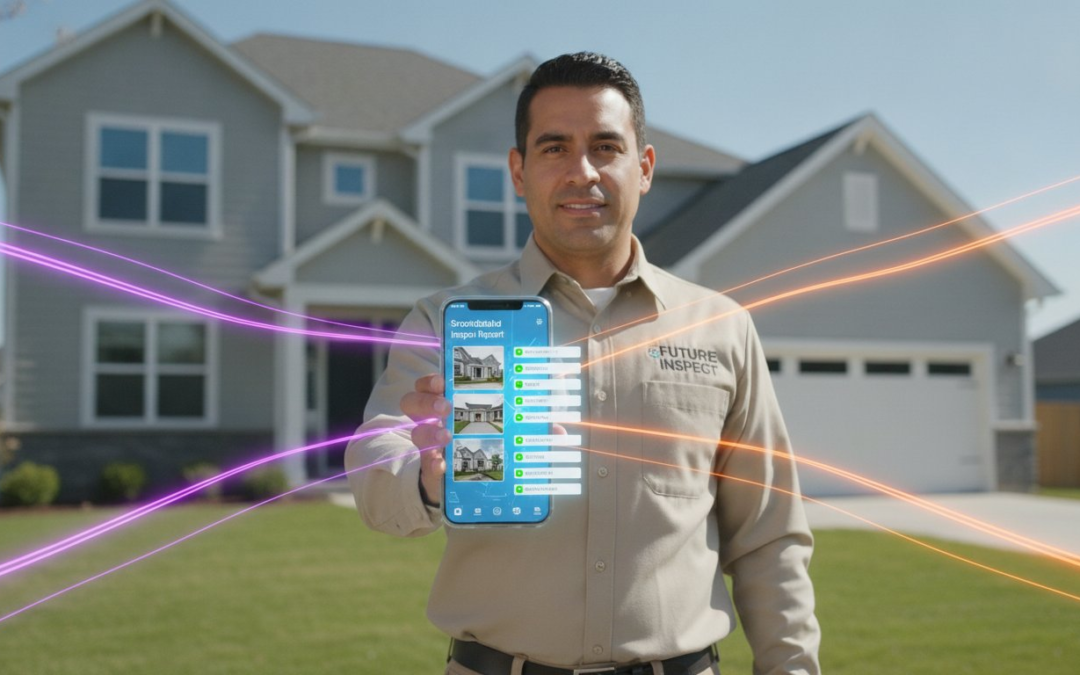
Why does manual photo labeling still take longer than the actual inspection? If your team is battling inconsistent report formats and rejected claims, you aren’t just losing time; you’re bleeding profit. It’s time to end the documentation chaos. Mastering the benefits of standardized inspection reports is the ultimate way to reclaim your schedule and your sanity. Inspect faster; report instantly; win bigger.
We know the grind of field work is hard enough without the headache of tedious data entry. It’s frustrating to see great work stalled by poor documentation. This article promises to show you how standardizing your workflow eliminates friction, slashes cycle times, and protects your bottom line. We’ll preview five critical benefits for 2026, ranging from zero-friction field documentation to seamless integration with platforms like Xactimate. You’ll see exactly how to transform your onsite process into a high-velocity engine of efficiency. Let’s get to work.
Key Takeaways
- Stop the documentation bleed! Learn how automated labeling turns hours of office work into seconds of field effort.
- Maximize your revenue by leveraging the benefits of standardized inspection reports to slash claim cycle times and boost carrier approval.
- Eliminate terminology confusion and costly re-work by deploying custom inspection templates across your entire field team.
- Integrate your workflow with platforms like Xactimate to ensure zero-friction documentation and professional, rejected-proof results.
- Take command of your operations with a centralized dashboard that scales your efficiency and restores order to jobsite chaos!
The High Cost of Non-Standardized Inspection Data
Chaos in the field isn’t just annoying; it’s expensive. When your team uses different terms for the same damage, your office staff spends hours playing detective. Fragmented data leads to constant re-work and those dreaded “more information needed” emails from carriers that stall your cash flow. Inconsistent labeling makes it impossible to compare historical data across projects or track team performance accurately. Without a solid Standard Inspection Procedure (SIP), your documentation becomes a liability rather than a business asset. You’re likely facing the “Photo Bottleneck,” where manual photo organization kills your project ROI before the report is even finished.
In 2026, speed is the only currency that matters. If your team still waits until the end of the day to upload and label photos, you’ve already lost the race. Delayed data means delayed approvals and frustrated clients. Non-standardized workflows create a ripple effect of inefficiency that touches every part of your operation:
- Increased claim cycle times that frustrate homeowners.
- Higher administrative overhead from manual data entry.
- Frequent re-inspections due to missing or poorly labeled photos.
- Reduced team morale from repetitive, soul-crushing manual tasks.
The Hidden Drain on Team Productivity
Stop wasting time clarifying vague field notes. Every minute spent guessing what a photo represents is a minute you aren’t closing a new deal. Industry professionals report that field teams can lose several hours per week just chasing down “lost” photos or fixing documentation gaps. These gaps don’t just slow you down; they create massive legal and insurance liability. If you can’t prove the condition of a property with clear, standardized evidence, you’re vulnerable. One of the primary benefits of standardized inspection reports is the immediate elimination of this administrative drag, allowing your team to focus on their actual expertise.
Why Manual Entry is Obsolete in 2026
The industry has moved beyond simple recording. In 2026, the standard is capturing data instantly as it happens. Manual entry is slow, prone to human bias, and riddled with terminology errors that confuse everyone from the adjuster to the homeowner. We define the “Documentation Gap” in modern contracting as the profit-draining space between capturing a physical image and generating a usable digital report. Relying on end-of-day uploads is a recipe for disaster. You need real-time accuracy to stay competitive. One of the greatest benefits of standardized inspection reports is that they transform your data from a messy pile of files into a strategic business tool. Don’t let manual habits hold your business back. Capture. Label. Deliver.
5 Core Benefits of Standardized Inspection Reports
Standardization is the engine of growth. You cannot scale a mess; you can only scale a system. One of the primary benefits of standardized inspection reports is the radical shift from subjective guesswork to objective data. This transition ensures every team member speaks the same language, regardless of their experience level. When your reports follow a fixed, professional structure, carriers see a partner they can trust. You move from being just another contractor to becoming a preferred professional. Eliminate the guesswork. Standardize your success. Stabilize your future.
Accelerated Cycle Times and Cash Flow
Speed is the ultimate competitive advantage in 2026. Standardized data streamlines the reporting process by removing the ambiguity that triggers adjuster questions. When a report is clear, concise, and complete, it moves through the approval pipeline without friction. You stop the endless back-and-forth between field adjusters and office reviewers. This efficiency has a direct impact on your bank account. Faster reports lead to faster approvals. Faster approvals lead to faster payments. It is a simple, powerful equation for your cash flow. Don’t let poor documentation hold your money hostage.
Unmatched Accountability and Oversight
Build ironclad trust with every click. Standardized reporting isn’t just about labels; it’s about proof. By using standard timestamps and GPS data, you create a digital paper trail that is impossible to dispute. This level of transparency builds immediate credibility with clients and carriers alike. You can also use this structured data for long-term performance analytics to see which team members are hitting their marks. To truly dominate the market, integrate aerial roof and wall measurements into your standard workflow. This provides a level of precision that manual tape measures simply cannot touch. It’s about being the most accurate professional in the room every single time.
Training new hires used to take months of shadowing and “gut feel” learning. Now, you can slash that time by 50% or more. New team members simply follow the custom inspection templates you’ve already optimized for success. The software guides them through every necessary photo and label, ensuring nothing is missed. This consistency extends to your technology stack as well. Your standardized reports should integrate seamlessly with industry platforms like Xactimate and Verisk. No more manual re-entry. No more formatting headaches. Just clean, actionable data that flows from the jobsite to the estimate in seconds. If you’re ready to see these results in your own business, consider a mobile app subscription to start automating your field documentation today. Capture the data. Control the process. Conquer the chaos.
Standard Templates vs. Manual Entry: A Productivity Breakdown
Stop treating your inspections like a scrapbooking project. Manual entry is the silent killer of your profitability. Every minute you spend dragging photos into a PDF or typing labels on a tiny keyboard is a minute you aren’t inspecting the next property. One of the primary benefits of standardized inspection reports is the total elimination of the post-inspection grind. You move from manual assembly to instant generation. It’s the difference between building a car from scratch and just turning the key. Capture the data. Generate the report. Close the file.
The manual method is a relic of a slower era. In 2026, waiting until you get home to organize your photos is a mistake that costs you hours every week. Real-time syncing ensures that your office team sees what you see, exactly when you see it. This instant visibility allows for immediate review and faster estimate drafting. When you use automated tools, you aren’t just “going digital.” You are moving from “generic digital” to “automated digital,” where the software does the heavy lifting for you.
The Power of Voice-to-Text Labeling
Voice-to-text labeling reduces manual entry by up to 75%. That is a massive recovery of your most valuable resource: time. Instead of fumbling with a touchscreen in the rain or cold, you simply describe the damage as you see it. Voice-to-text ensures labels are applied while you are still onsite and the details are fresh in your mind. It standardizes your terminology through voice-command presets, ensuring every report uses professional, carrier-approved language. Speak. Snap. Submit. It’s that simple. Speaking is naturally faster than typing on a mobile device, allowing you to document a room in seconds rather than minutes.
Custom Templates: Flexibility Meets Standard
Generic templates fail because they don’t account for the unique demands of every property. You need a blueprint that guides your team through a logical, high-velocity path. Custom inspection templates ensure that every mandatory photo is captured every single time. They provide the structure of a standard while maintaining the flexibility your specific niche requires. You don’t have to rely on a new hire’s gut feeling or memory. The template tells them exactly what to do next. This ensures that when you leave the jobsite, you have everything you need. No more return trips. No more missing roof slopes. No more documentation gaps. One of the most significant benefits of standardized inspection reports is this guaranteed consistency across your entire fleet. Build your blueprint. Deploy your team. Dominate your market.
Implementing a Standardized Workflow for Field Teams
Stop talking about efficiency and start enforcing it. Implementation is where your strategy meets the jobsite mud. You’ve seen the benefits of standardized inspection reports; now it’s time to build the engine that drives them. This isn’t a complex overhaul. It’s a structured shift in how your team interacts with every property. You must move from a collection of individuals to a unified force. Set the standard. Deploy the tools. Reap the rewards.
Success follows a specific path. First, identify your core terminologies and photo requirements. Don’t let three different adjusters call a “scupper” three different things. Use your custom report builder to lock in these terms. Second, deploy a centralized team management dashboard. This is your command center for every active project. Third, train your team on automated labeling and virtual tools. Finally, audit your results. Use carrier feedback to refine your templates until your approval rate hits 100%. Audit. Refine. Repeat.
Centralized Dashboard for Real-Time Oversight
Managers shouldn’t have to wait for an inspector to drive back to the office to see the damage. A team management dashboard allows for instant review of every photo captured in the field. You can spot a missing elevation or a blurry shingle shot while the inspector is still on the ladder. This prevents costly return trips and keeps your projects moving forward. Virtual inspection software allows you to manage ten projects from your desk as easily as one. It’s about oversight, not micromanagement. See the work. Verify the quality. Approve the report.
Training for High-Velocity Documentation
Training your team isn’t just about showing them an app. It’s about changing their mindset. They aren’t just “taking pictures” anymore. They are building a high-value data set for the insurance carrier. Encourage team buy-in by highlighting the “saved hour” benefit. When your field staff realizes they can finish their documentation onsite and skip the two-hour office grind, they’ll embrace the system instantly. Focus on best practices for moisture mapping and interior documentation. Clear data leads to clear approvals. Move from “taking photos” to “capturing evidence.”
High-velocity documentation is the only way to stay profitable in 2026. Your competitors are already automating. Don’t get left behind with a bag full of unlabeled photos and a mountain of office work. Take command of your operations and ensure every member of your team is a peak performer. Ready to scale your efficiency? Deploy the PHOTO iD Team Management Dashboard and take total control of your field operations today. Build the system. Scale the business. Win the day.
Scaling Efficiency with PHOTO iD’s Automated Reporting
Scale your operations without scaling your stress. PHOTO iD stands as the game-changing partner for property professionals who refuse to settle for “good enough.” By centralizing your workflow, you unlock the full benefits of standardized inspection reports across every jobsite. It’s time to move from manual chaos to automated precision. Snap. Label. Deliver. It really is that simple. You don’t need more staff; you need better systems that work as hard as you do.
Automate everything from your photo labeling to your final report generation. Why waste hours on administrative tasks when you could be closing more files? Integrating aerial roof and wall measurements alongside virtual site visits into one platform gives you a 360-degree view of your business. You gain total control over your documentation and, more importantly, you reclaim your time. Documentation shouldn’t be a chore. It should be your competitive advantage. Reclaiming just one hour per day adds up to over 250 hours of pure productivity every year.
The All-in-One Inspection Solution
Your mobile device becomes the central hub for all field work. PHOTO iD doesn’t just store photos; it builds a data-rich environment that supports Xactimate and Verisk workflows flawlessly. This seamless integration means your field data flows directly into your estimates without manual re-entry. For small businesses, this impact is massive. It allows you to handle a higher volume of claims with the same size team. You grow faster. You work smarter. You win bigger. Instant report generation turns a finished inspection into a finished file in seconds, not hours.
Join the Future of Inspection Management
The competitive landscape of 2026 belongs to the efficient. Superior documentation isn’t a luxury; it’s a requirement for survival. Carriers demand clarity, and clients expect speed. When you eliminate the photo bottleneck, you remove the single biggest obstacle to your profitability. Join the community of over 15,000 users who have already modernized their approach to field work. One of the greatest benefits of standardized inspection reports is the peace of mind that comes from knowing every file is perfect. Stop fighting your documentation and start letting it work for you. Are you ready to lead the pack?
Take command of your business and ensure every member of your team is a peak performer. Don’t let another day disappear into a mountain of unlabeled photos and rejected claims. Optimize your inspection workflow with PHOTO iD today and see the difference that instant report generation makes for your bottom line. Take command. Restore order. Reclaim your day!
Master the Future of Field Documentation
The era of manual labeling and fragmented data is over. By embracing the benefits of standardized inspection reports, you’ve learned how to eliminate documentation chaos, slash cycle times, and boost your bottom line with every click. You now have the blueprint to transform your onsite process from a profit-draining bottleneck into a high-velocity engine of growth. It’s time to stop fighting your tools and start letting them work for you. Capture the data. Control the process. Conquer the chaos.
Trusted by thousands of field professionals, PHOTO iD provides the advanced voice-to-text labeling technology and instant report generation you need to stay ahead of the competition in 2026. Don’t let documentation drag down your profitability or delay your payments. Take command of your workflow. Restore order to your jobsite. Reclaim your time. Success is just one click away!
Start your free trial of PHOTO iD and automate your reports today!
Frequently Asked Questions
What are the main benefits of standardized inspection reports?
The primary benefits of standardized inspection reports include a massive reduction in claim cycle times and the total elimination of documentation chaos. By using a uniform structure, you remove ambiguity and ensure every team member captures mandatory data every time. This consistency protects your bottom line and prevents rejected claims caused by missing or confusing information.
How does automated photo labeling improve report accuracy?
Automated photo labeling improves accuracy by assigning descriptions to images instantly while you are still onsite. This eliminates the risk of misidentifying damage hours later when your memory is fuzzy. It ensures every photo has a clear, professional label that matches your team’s standard terminology, creating an ironclad data set for carriers and adjusters.
Can standardized reports be customized for different inspection types?
Yes, you can customize standardized reports for any job type. Using a custom report builder allows you to create specific templates for roofs, interiors, or full property assessments. You maintain a high-level professional format while ensuring the unique requirements of each specific inspection are met without fail. Build your blueprint once and deploy it everywhere.
Do standardized reports help with insurance claim approvals?
Standardized reports significantly accelerate insurance claim approvals by providing clear, organized evidence adjusters can process immediately. Professional formatting and consistent labeling reduce the frustrating back and forth questions from carriers. When you deliver a report that follows industry standard structures, you build immediate credibility and get paid faster.
How long does it take to implement a standardized reporting system?
You can implement a standardized reporting system in a single day. Once you deploy custom inspection templates to your field team, they can begin capturing data instantly. The learning curve is minimal because the app guides the user through every necessary step. You don’t need weeks of training to start seeing massive productivity gains.
Is voice-to-text labeling faster than manual typing for reports?
Voice-to-text labeling is up to 75% faster than manual typing. Inspectors speak their labels while they work, which keeps their hands free and their eyes on the property. This technology eliminates the soul crushing post inspection grind by completing the documentation before the inspector even leaves the jobsite. Speak it, snap it, and move to the next lead.
How does a team management dashboard improve inspection oversight?
A team management dashboard provides real time oversight by allowing managers to review field photos and reports as they are captured. You can identify missing photos or labeling errors before the inspector leaves the property, which prevents costly return trips. It centralizes multiple projects into one command center for maximum administrative efficiency and total project control.
What software is best for creating standardized property reports?
PHOTO iD is the premier software for creating standardized property reports in 2026. It combines automated photo labeling, voice-to-text technology, and custom report building into one high velocity mobile platform. Trusted by thousands of professionals, it integrates seamlessly with industry tools to ensure your documentation is fast, accurate, and professional every single time.