
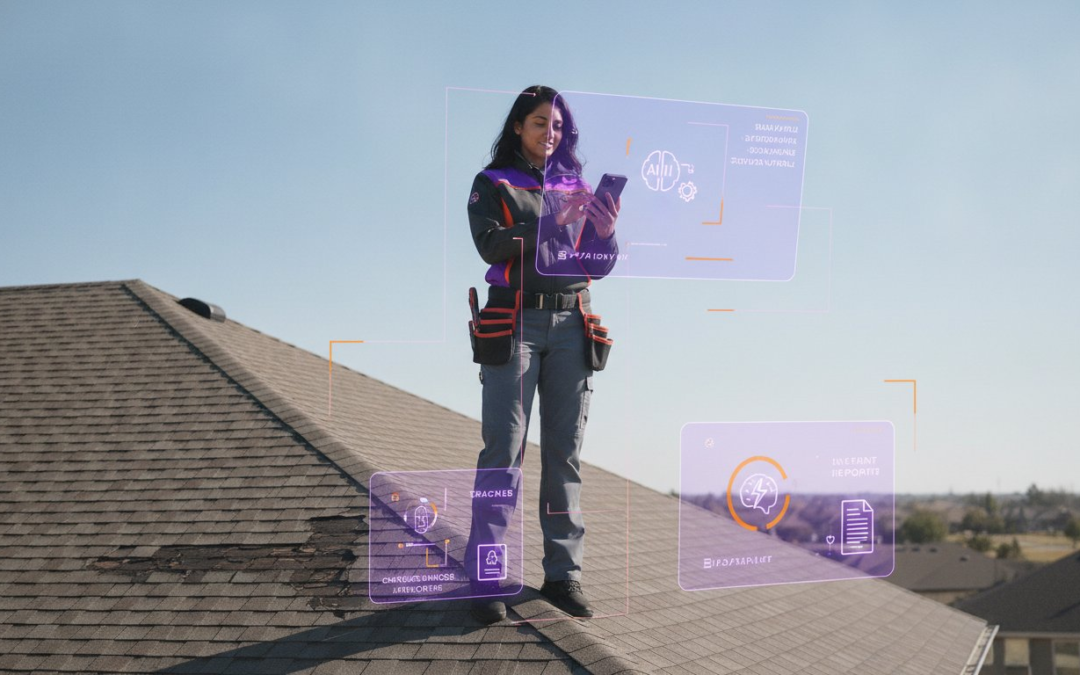
A missed photo isn’t just a mistake; it’s a direct hit to your bottom line. You know the grind of spending hours labeling photos after a long day in the field, only to have supplements denied because of a single missing detail. It’s time to stop fighting the chaos of fragmented communication and manual entry. The right software for creating supplemental damage reports transforms your onsite data into a powerful financial strategy that insurance carriers can’t ignore. You work hard on the jobsite, so don’t let poor documentation stall your revenue.
Discover how to automate your documentation, eliminate reporting errors, and secure faster claim approvals with precision tools designed for the modern professional. This 2026 guide reveals the exact path to reducing your reporting time by 50% while standardizing every inspection across your entire team. We’ll dive into the latest AI-driven automation, voice-to-text labeling, and mobile workflows that turn your smartphone into a reporting powerhouse. We’ll explore how to navigate the evolving landscape of IICRC standards and FEMA requirements with ease. It’s time to capture, categorize, and complete every report with total confidence!
Key Takeaways
- Eliminate supplement denials by replacing unreliable manual notes with automated, indisputable visual proof that carriers can’t ignore.
- Master the latest software for creating supplemental damage reports to slash your documentation time from four hours to fifteen minutes per project.
- Capture critical details in real-time using voice-to-text labeling to ensure your field reports are 100% accurate before you even leave the site.
- Deploy custom inspection templates to standardize every report across your team and remove the risk of fragmented communication or missed photos.
- Gain total project oversight with a centralized dashboard that bridges the gap between field teams and office managers instantly!
The Critical Role of Supplemental Damage Reports in 2026
Stop leaving money on the table. A supplemental damage report is the vital bridge between your initial estimate and the final repair costs. It’s your financial lifeline. In 2026, the industry has shifted completely toward a “documentation-first” approach. This means adjusters and carrier examiners won’t move an inch without indisputable evidence. Manual documentation is currently the top cause of supplement denials across the board. It’s too slow, too disorganized, and far too messy for the modern pace of insurance claims. You need a system that works as hard as you do.
Stakeholders need total clarity to move a file forward. Contractors, adjusters, and carrier examiners all rely on the same data set to reach an agreement. If that data is a disorganized pile of unlabeled photos, the entire process breaks down. Adopting specialized software for creating supplemental damage reports fixes this friction instantly. It creates a professional standard that aligns with formal property condition assessments used throughout the industry. The best software for creating supplemental damage reports turns onsite chaos into a clean, professional narrative that carriers can’t argue with. Capture the data. Label the damage. Secure the approval!
Why Initial Estimates Often Fall Short
Initial estimates are often just educated guesses. The real work begins during the tear-off and demolition phases. This is when hidden damage finally reveals itself. You’ll frequently find rotted subfloors, compromised framing, or mold that wasn’t visible during the first walk-through. Material costs also shift rapidly in today’s market, and local building codes might require upgrades that weren’t in the original scope. You need a way to document these surprises the second they appear. Don’t wait until the end of the day to try and remember the details. Document it live!
The Financial Impact of Poor Reporting
Bad data is expensive. Think about the massive “Time-Cost” of every back-and-forth email with a skeptical adjuster. Every time you have to answer an “Information Request” because of a missing photo label, you lose profit. There’s a direct, measurable link between photo clarity and how fast you get paid. High-quality documentation eliminates the human error that leads to stalled projects and frustrated clients. Clear photos lead to fast checks. It’s that simple. Build a report that is fast, flawless, and financial!
Essential Features of Professional Supplemental Reporting Software
High-performance field work demands more than just a camera and a clipboard. In 2026, your tech stack is your competitive edge. The best software for creating supplemental damage reports doesn’t just store files; it actively builds your case. Look for features that kill manual entry. Automated photo labeling and voice-to-text capabilities allow you to narrate damage while you’re still on the ladder. This is the end of the “desk-work hangover.” You shouldn’t be typing labels at 9 PM. Capture. Categorize. Complete. Your software should handle the heavy lifting so you can focus on the assessment.
Speed is your currency. Instant report generation formats your data to meet rigid carrier standards the moment you hit “save.” Cloud synchronization ensures your office team sees what you see in real-time. This level of transparency is critical when working with advocates in the claims process who need immediate access to verified data. If your software isn’t syncing instantly, you’re falling behind the pace of the modern jobsite. Efficiency isn’t just about moving faster; it’s about being more accurate with every click.
Automation: The Core of 2026 Efficiency
Stop guessing. Automated labeling prevents “photo amnesia,” that frustrating moment when you can’t remember which room a specific water stain was in. Use custom inspection templates to force a standard of excellence across every project. These templates guide you through the process, ensuring no detail is missed. Every photo should include real-time GPS coordinates and timestamps. This creates a bulletproof chain of custody that verifies the integrity of your documentation. When you use software for creating supplemental damage reports, you’re building a foundation of trust with every stakeholder.
Integration and Compatibility
Your tools must talk to each other. Your reporting software should integrate seamlessly with industry giants like Xactimate and Verisk to streamline the estimating process. You need flexible sharing options, including professional PDFs and web-based links, to keep stakeholders informed. Never compromise on image quality. Ensure your exports maintain high-resolution detail and full metadata. For a professional result, consider using an automated photo app that handles these complex steps for you. High-velocity reporting requires a system that is both modern and reliable. Keep your data moving!
Manual vs. Automated Reporting: Calculating the ROI
Time is your most valuable asset. Stop wasting it. If you are currently spending four hours organizing a 100-photo report after a long day in the sun, you are effectively paying yourself a fraction of what you’re worth. Professional software for creating supplemental damage reports slashes that same task down to just 15 minutes. This isn’t just a minor improvement; it’s a total workflow revolution. Manual file naming and messy folder structures are breeding grounds for human error. One misplaced photo or a single typo in a file name can trigger an instant denial from a carrier. Automate the process. Eliminate the risk. Reclaim your evenings.
The psychological relief of “finishing the report before leaving the driveway” cannot be overstated. When you walk away from a jobsite with a completed, labeled, and formatted report, your stress levels plummet. You aren’t carrying the weight of unfinished paperwork into your dinner or your sleep. Using software for creating supplemental damage reports ensures that your most productive hours stay in the field, not behind a desk. Some professionals ask if a subscription cost is worth it. Calculate your hourly rate. If the software saves you even two hours a month, it has already paid for itself. The rest is pure profit.
The Hidden Costs of Manual Entry
Manual entry carries heavy baggage. Many firms try to solve the bottleneck by hiring administrative assistants just to label photos and organize folders. This adds massive overhead without solving the root problem. During peak catastrophe seasons, the “Burnout Factor” hits hard. Exhausted adjusters make more mistakes, leading to more “Information Requests” and stalled checks. Consider the opportunity cost. If you save three hours per report, how many more inspections can you fit into your week? Scale your business, don’t just grow your pile of paperwork. Be fast, be lean, and stay profitable!
Data Integrity and Claim Defensibility
Carrier examiners look for reasons to say no. Don’t give them any. Automated timestamps and GPS metadata are significantly harder for carriers to dispute than manual notes. When every photo has clear context through voice-to-text descriptions, the damage narrative becomes indisputable. Standardizing your reports means every team member produces the same high-quality output, regardless of their experience level. This consistency builds a reputation for excellence with adjusters.
- Verify: Real-time GPS and timestamps prove the “when” and “where” instantly.
- Clarify: Voice-to-text descriptions provide the “what” and “why” without typing.
- Defend: Professional formatting ensures your data is accurate, accessible, and approved!
Stop fighting the system and start using tools that make your documentation bulletproof.
How to Build a Bulletproof Supplemental Report in the Field
Precision starts before you snap your first photo. To build a bulletproof supplement, you need a repeatable workflow that leaves no room for carrier pushback. Stop guessing and start executing. Begin by selecting the right inspection template for your specific damage type. Whether you are dealing with wind, water, or fire, the right template ensures you follow a logical path through the property. This structure forces a standard of excellence that adjusters respect. When you use the right software for creating supplemental damage reports, you aren’t just taking pictures; you are building an airtight case for your repair costs.
Capture, label, and narrate your findings in real-time. This is where your software for creating supplemental damage reports proves its worth. Use voice-to-text commands to describe the “why” behind every supplement while you are staring right at the damage. Don’t wait until you get back to the office to try and remember the details. Review your instant report for gaps before you ever pull out of the driveway. If you missed a specific slope or a hidden failure point, fix it now. Sync everything to the cloud for immediate submission. Fast, flawless, and finished!
Capture. Label. Submit!
Capture. Label. Submit! This mantra is your ticket to faster approvals. Focus on high-impact photos that tell a complete story. Start with wide shots to provide context for the entire area. Move to medium shots to isolate the specific damage. Finish with macro views to document the exact failure point. Use voice commands to explain the necessity of the supplement while the evidence is right in front of you. Your software will automatically organize these photos by room or elevation. This eliminates the “photo amnesia” that kills supplement approvals. Organize your data. Optimize your workflow. Overcome denials!
Leveraging Aerial Measurements
Accuracy is the enemy of denial. Integrate aerial roof and wall measurements directly into your supplemental argument. Carriers often reject supplements due to “rounding errors” or vague dimensions. Precise aerial data removes that excuse entirely. Visualize damage locations on a digital site map to show exactly where the failure occurred. This level of detail makes your report indisputable and professional. To automate this entire workflow and secure faster approvals, get started with PHOTO iD today! High-velocity documentation is just a click away.
PHOTO iD: The All-in-One Solution for Supplemental Reports
PHOTO iD stands alone as the industry leader in automated photo organization. It is more than just a tool; it is your most reliable field partner. When you choose the right software for creating supplemental damage reports, you aren’t just buying an app. You are investing in a system that restores order to the chaos of the jobsite. Stop fighting your documentation and start letting it work for you. PHOTO iD bridges the gap between the physical inspection and the final approval with unmatched speed and precision. Capture the data. Categorize the damage. Complete the claim!
Professionalism is non-negotiable in 2026. Carriers demand reports that are clean, structured, and easy to read. PHOTO iD delivers exactly that with custom report builders tailored for both adjusters and contractors. You can generate a polished, carrier-ready document the moment you finish your walkthrough. This eliminates the “desk-work bottleneck” that slows down your revenue cycle. High-velocity documentation is no longer a luxury; it’s a requirement for survival in the modern inspection landscape. Use software for creating supplemental damage reports that was built for the speed of the field.
The Power of the Team Dashboard
Monitor, manage, and master your projects from a single screen. The Team Management Dashboard allows you to oversee field progress from the office without making a single phone call. This is the level of oversight that modern firms demand. You can manage multiple inspectors and large-scale catastrophe responses seamlessly. Track every file in real-time to ensure quality control before your team even leaves the site. Centralize all your claim documentation in one secure, cloud-based hub. This isn’t just management; it’s total project oversight that keeps your business moving forward!
Why Industry Veterans Choose PHOTO iD
Experience matters. Industry veterans choose PHOTO iD because it was built by experts who understand the “Claims Coach” philosophy of documentation. We know that every photo must tell a story that justifies the cost. Experience the speed of instant photo report generation compared to traditional, clunky methods. You get reliable support and specialized templates for every inspection niche, from roofing to water mitigation. This is the professional standard for the specialized labor and assessment industries.
- Expertise: Built by pros who know the daily grind of the field.
- Velocity: Generate reports in seconds, not hours or days.
- Reliability: Secure cloud storage ensures your data is always safe and accessible.
Empower your team and reclaim your time today. The path to faster approvals and standardized documentation starts here. Don’t settle for manual chaos when you can have digital precision. Join the thousands of professionals who have already upgraded their workflow. Capture the win with PHOTO iD!
Master Your Workflow and Maximize Your Profits
The era of manual documentation is over. You’ve learned how the right software for creating supplemental damage reports transforms a four-hour ordeal into a fifteen-minute victory. By mastering automated photo labeling and voice-to-text efficiency, you eliminate the human error that leads to costly denials. You protect your revenue, your reputation, and your time. This is the professional standard that defines the most successful firms in 2026. Precision, speed, and accuracy are your new benchmarks!
Join the elite network of top adjusters nationwide who rely on professional automation to stay ahead of the curve. Stop fighting the desk-work bottleneck and start delivering the bulletproof reports that carriers demand. With instant report generation and seamless cloud synchronization, you are always one step ahead of the competition. Capture the data. Label the damage. Secure the win! Your most profitable season starts with the right technology at your fingertips.
Start Your PHOTO iD Subscription and Automate Your Reports!
Take control of your workflow now and experience the relief of a finished report before you even leave the driveway. You’ve got the skills. Now, use the tools that match your expertise!
Frequently Asked Questions
What is the best software for supplemental damage reports?
PHOTO iD is the industry leader for automated photo organization and instant report generation. It provides a comprehensive mobile app subscription that streamlines the entire workflow from the initial capture to the final submission. By using specialized tools, you ensure every photo is labeled and categorized correctly the first time. This creates a professional standard that carriers trust and approve quickly. Capture the data and win the claim!
Can I use my smartphone to create professional inspection reports?
You can absolutely use your smartphone to generate professional reports with a mobile app subscription. Modern smartphones have high-quality cameras that pair perfectly with professional reporting software to outperform traditional equipment. You capture damage, label it instantly, and sync it to the cloud without ever needing a separate laptop in the field. It is the most efficient way to handle high-volume inspections today.
How does automated photo labeling save time for adjusters?
Automated photo labeling saves time by eliminating the need for manual typing after a long day in the field. Instead of spending hours at your desk renaming files, the software handles the organization in real-time. This high-velocity approach allows you to finish your documentation before you even leave the jobsite. Save your evenings for yourself and let the automation do the heavy lifting!
Does supplemental reporting software integrate with Xactimate?
Yes, professional software for creating supplemental damage reports is designed to integrate seamlessly with industry giants like Xactimate and Verisk. This allows you to import your organized photo reports directly into your estimates. It bridges the gap between your visual evidence and your financial data. This ensures a smooth approval process with carrier examiners and keeps your projects moving forward without delay.
What features should I look for in a field inspection app?
Look for custom inspection templates, voice-to-text labeling, and a centralized team dashboard. You need a tool that offers instant photo report generation and reliable cloud synchronization. These features ensure that your data is standardized across your entire team and accessible to office managers the moment it’s captured. Don’t settle for basic gallery apps; choose a solution built for the specialized labor industry.
Is voice-to-text labeling accurate for technical damage descriptions?
Voice-to-text labeling is highly accurate and specifically designed to handle technical damage descriptions and industry jargon. It allows you to narrate complex findings while your hands are busy on a ladder or in a crawlspace. This real-time narration ensures you capture critical details that might be forgotten later. It makes your supplemental argument much stronger and provides the context adjusters need to approve the cost.
How do I manage a team of field inspectors using software?
Manage your team using a centralized Team Management Dashboard that provides real-time project oversight. You can monitor field progress, assign tasks, and review reports from the office without making a single phone call. This is essential for large-scale catastrophe responses where coordination between field teams and office managers is the key to success. Stay organized, stay connected, and stay profitable with cloud-based management.
Will using reporting software increase my supplement approval rate?
Using professional software for creating supplemental damage reports significantly increases your approval rate by providing indisputable visual proof. Clear, labeled, and timestamped photos remove the ambiguity that leads to carrier denials. When you present a polished, professional narrative, you make it much easier for adjusters to say yes to your supplemental requests. Better documentation always leads to faster checks and higher revenue!