
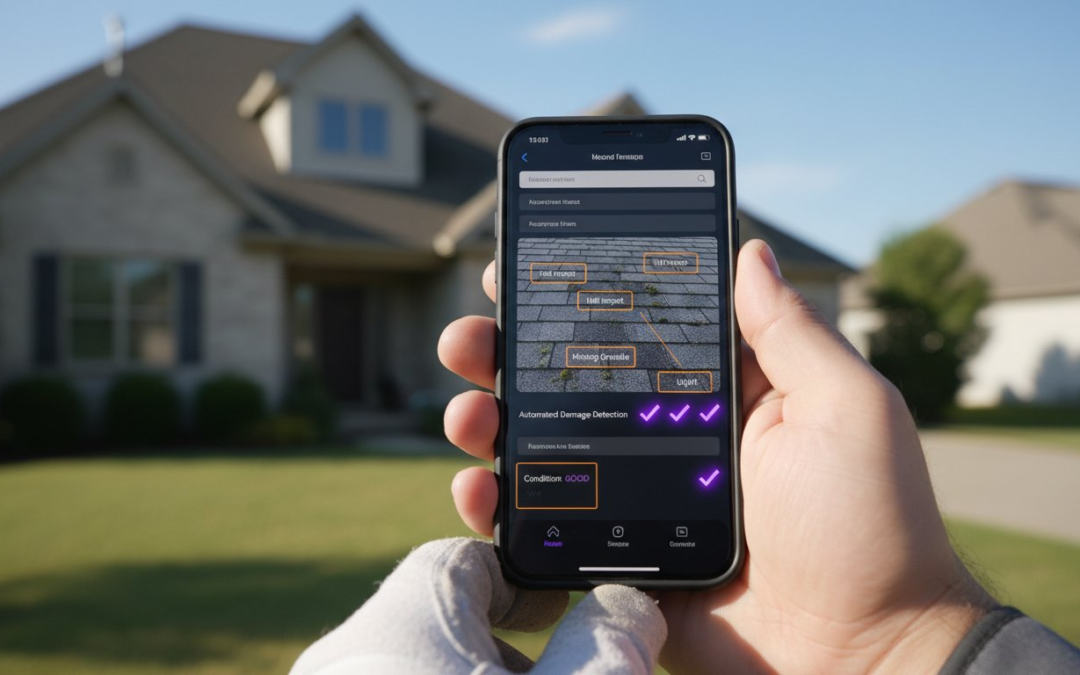
Did you know that 67% of property managers adopted digital inspection tools by 2025, yet only 28% have actually achieved full automation? Most pros are still trapped in the “Photo Fog,” spending their nights labeling hundreds of images from memory while trying to focus on improving inspection report accuracy. You know the frustration of having a report rejected because of a single mislabeled photo or a missing piece of evidence. With new regulations like the 2025 Massachusetts home inspection law increasing the demand for transparency, the margin for error has never been thinner.
Accuracy isn’t about being a better writer; it’s about mastering a documentation discipline powered by real-time automation. You deserve a workflow that works as hard as you do. This guide teaches you how to eliminate manual errors and deliver precision-grade reports using automated labeling and instant organization. We’ll show you how to protect your business with defensible documentation that’s finished before you even leave the jobsite. Snap, Speak, Send; it’s time to restore order to the chaos of your field work and reclaim your evenings.
Key Takeaways
- Stop paying the “hidden tax” of report revisions. Improving inspection report accuracy starts with eliminating reliance on fading memory.
- Compare system-by-system and room-by-room architectures to find the specific workflow that minimizes missed defects and maximizes clarity.
- Replace slow manual typing with voice-to-text labeling to document findings instantly while your hands stay free for the job.
- Eliminate “Photo Fog” by using automated labeling to attach critical data to every image file at the exact moment of capture.
- Adopt the “Snap, Speak, Send” mantra to generate professional, defensible reports that protect your business and reclaim your evenings.
The High Cost of Inaccurate Inspection Reports
Every hour you spend back at the office fixing errors is a “Hidden Tax” on your profitability. Inaccurate reports trigger a cycle of administrative back-and-forth that drains your energy and kills your margins. Human memory is fragile. Research shows that specific details begin to fade within minutes of leaving a jobsite. If you aren’t documenting in real time, you’re working dangerously. Your goal is a report that is defensible, crystal clear, and completed before you pull out of the driveway. Improving inspection report accuracy isn’t a luxury. It’s a survival strategy for the modern professional who wants to scale without the stress. With 67% of property managers already using digital tools as of 2025, you can’t afford to lag behind with manual processes that invite error.
Why Manual Labeling is an Accuracy Killer
The “Photo Pile” is the enemy of every field pro. You finish a long day with 200 unlabeled photos sitting in your phone’s gallery. By the time you sit down for dinner, the difference between the master bedroom ceiling and the guest room closet starts to blur. This is where mistakes happen. Misidentifying a room or a critical system isn’t just a typo. It’s a failure of documentation. Fatigue is a real factor. As your day gets longer, your accuracy naturally drops. Manual entry at 8:00 PM is a recipe for disaster. You need a system that organizes the chaos instantly. Don’t let a long day turn into a long night of data entry. Capture the data at the source while it’s fresh.
The Liability of Vague Documentation
Vague, “canned” comments won’t protect you in court. To understand the stakes, consider the foundational standards of what is a home inspection? and how it serves as a legal record. If your evidence isn’t specific, it’s useless. Precision-grade documentation requires timestamped, GPS-located evidence that proves you were there and saw the defect. This level of detail protects you against future liability and ensures insurance claims aren’t denied due to lack of clarity. Precise labeling turns a simple photo into a powerful, defensible asset. Improving inspection report accuracy means providing data that is impossible to dispute. Remember, A Picture is Worth a 1000 Words! But only if that picture is correctly identified and filed. Stop guessing and start documenting with authority. Use the Snap, Speak, Send method to ensure every defect is recorded with 100% precision before you leave the site.
5 Steps to Improving Inspection Report Accuracy Instantly
Stop writing reports. Start capturing them. Most inspectors fail because they treat documentation as a post-job chore. Improving inspection report accuracy requires a shift to a field-first mindset. You need a process that guarantees precision while you’re still on the ladder or in the crawlspace. By implementing these five steps, you can move from a 28% automation rate toward a fully streamlined, zero-revision workflow. It’s about moving fast without breaking your data integrity.
Step 1: Use Templates to Prevent Omissions
Templates are your digital safety net. They act as a mandatory checklist for every room and system. Don’t rely on your brain to remember every outlet or window lock. Use custom templates for specific jobs like Roof, Mold, or HVAC inspections. This ensures every required field is validated before you even generate the report. It’s about building a repeatable system that leaves no room for human error. If the field isn’t filled, the report isn’t done. This simple gatekeeper function keeps your documentation defensible and professional.
Step 2: Master Voice-to-Text Documentation
Speaking your descriptions is 3x faster than typing and 2x more accurate. When you type on a tiny screen with gloves on, you make mistakes. When you speak, you capture the “story” of the damage while looking directly at it. This real-time narration is a key factor in improving inspection efficiency across the industry. Use a headset in noisy environments to ensure clear dictation. Your descriptions will be richer, more specific, and far more useful to the client. You can explore how voice-to-text labeling transforms your field speed instantly.
To round out your field-first strategy, follow these final three steps:
- Implement the Snap, Speak, Send methodology: Capture the photo, speak the label, and send it to the report immediately.
- Verify critical systems before leaving: Double-check your HVAC, Roof, and Plumbing data while you still have access to the property.
- Automate your photo organization: Stop the manual drag-and-drop. Use software that attaches data to the image file at the moment of capture.
Precision is a habit, not a talent. When you automate the organization process, you eliminate the mental drag of late-night office work. A Picture is Worth a 1000 Words! Make sure every word is accurate by documenting in the moment. This is how you achieve 100% real-time accuracy and protect your reputation on every job. Your clients expect precision. Your business demands efficiency. These steps deliver both.
System-by-System vs. Room-by-Room: Which is More Accurate?
Your report structure is the foundation of your professional reputation. Choose the wrong architecture and you invite confusion. Choose the right one and you automate clarity. Most pros debate between system-by-system and room-by-room methods. Both have merits. However, the best choice depends on your specific goal for improving inspection report accuracy. You need a layout that mirrors your physical movement while ensuring no defect is left undocumented. Accuracy isn’t just about what you see. It’s about where that data lives in the final document.
The Case for System-by-System Reporting
This method focuses on mechanical integrity. You group all plumbing, electrical, or HVAC findings together. It’s efficient. It’s logical. It’s professional. This structure reduces repetitive entries across different rooms. If you find a generic electrical issue, you note it once for the entire system. This is the gold standard for specialized audits like roofing or commercial electrical inspections. It allows for a deep dive into the technical health of the building without getting bogged down in floor plans. It’s a high-velocity approach for high-stakes technical work.
The Room-by-Room Advantage for Residential
Residential clients prefer this path. It follows your natural movement through the home. It makes the walkthrough intuitive for the homeowner. When you use the “Snap, Speak, Send” methodology, room-by-room reporting keeps your data perfectly siloed. You finish the kitchen, and you’re done with the kitchen. This prevents the “memory lag” we discussed earlier. By documenting every defect as you see it, you ensure that improving inspection report accuracy becomes a byproduct of your walk. It’s about capturing the story of the home room by room, ensuring nothing is missed in the transition between spaces.
Complex properties require a more sophisticated strategy. For multi-family or commercial sites, a hybrid approach is often the most accurate path. Use room-by-room for the living units to ensure tenant-level detail. Switch to system-by-system for the central plant or the building envelope. This flexibility is critical for large-scale documentation. Only 28% of property managers have achieved full automation as of 2026, and the hybrid method is a major step toward that goal. Automated photo labeling thrives in these environments because it attaches data to the image file instantly. It doesn’t matter which structure you choose if your photos are a disorganized mess. Your software must adapt to your workflow. It should organize, label, and file your evidence the moment you capture it. A Picture is Worth a 1000 Words! Make sure those words are in the right place. Don’t let a rigid report structure compromise your precision. Master your architecture and deliver reports that are impossible to challenge.
Eliminating the “Photo Fog” with Automated Labeling
“Photo Fog” is the mental exhaustion and confusion caused by hundreds of disorganized image files sitting in your camera roll. It’s the primary reason reports get rejected. When you have 150 unlabeled photos, you lose the context of the jobsite. You forget which attic corner had the leak or which circuit breaker was tripped. Improving inspection report accuracy requires a system that kills the fog at the source. Automated labeling attaches data to the image file at the exact moment of capture. This turns a simple JPEG into a piece of defensible documentation. You aren’t just taking a picture; you’re building a verified record. This real-time organization is essential for field-to-office collaboration, ensuring your team sees exactly what you saw without the guesswork.
Why Instant Labeling Beats Post-Processing
In-field labeling takes seconds. In-office processing takes hours. When you label as you go, you save an average of 2 to 4 hours of administrative work every single night. The technical benefit is clear: labels and metadata are baked into the documentation. If you’re handling high-volume photo sets of 100 images or more, you can’t afford to wait. Post-processing relies on a fading memory that we already know starts to fail within minutes of leaving the site. By using automated tools, you ensure that every defect is identified, categorized, and filed before you even put your phone in your pocket. It’s about working smarter, not longer.
Using Aerial Measurements for Precision
Manual tape-measure errors are a thing of the past. For roofing and exterior inspections, aerial roof and wall measurements provide a level of precision that manual methods can’t touch. These measurements integrate directly into your custom report builder, creating a seamless flow of data. This high-tech approach builds immediate trust with your clients. They see professional, data-driven evidence instead of rough estimates. When you combine aerial data with ground-level photos, your report becomes an airtight document that protects against liability. Precision in measurement is the twin brother of precision in documentation. Together, they make your business unstoppable.
Don’t let the chaos of disorganized photos slow you down. Streamline your field documentation and start delivering precision-grade reports today. You can get started with the PHOTO iD app to see how automated labeling transforms your workflow. Remember, A Picture is Worth a 1000 Words! But only if you can find it and explain it. Use the Snap, Speak, Send method to maintain 100% real-time accuracy on every jobsite. It’s time to clear the fog and reclaim your time.
Streamline Your Workflow with PHOTO iD
Stop fighting your documentation and start mastering it. PHOTO iD by U Scope Technologies is the all-in-one partner you need for improving inspection report accuracy. It’s a tech-savvy ally that restores order to the chaos of the jobsite. While 67% of property managers moved to digital tools by 2025, many still struggle with manual bottlenecks and disorganized photo sets. PHOTO iD eliminates those roadblocks instantly. It’s not just an app; it’s a professional edge that keeps you ahead of the competition. You deserve a tool that works as fast as you do, providing a sense of relief through pure technological efficiency.
Accuracy in the field is about more than just taking clear pictures. It’s about how that data is categorized and shared. Unlike generic photo apps, PHOTO iD is built specifically for the daily grind of the construction and inspection industries. It balances accessible language with technical power. You can effortlessly manage high-volume photo sets, generate instant reports, and maintain a professional edge that protects you against liability. This is the game-changing partner that allows you to focus on the inspection while the software handles the organization. It’s time to work smarter, not longer.
The Power of the Snap, Speak, Send Workflow
Snap a photo. Speak the label. Send it to the report. This is the mantra that reclaims your time and restores your sanity. By labeling in real-time, you eliminate the need for evening office work entirely. You finish the report while you’re still standing on the jobsite. This immediate documentation ensures that every detail is captured with 100% precision before your memory begins to fade. In the high-stakes world of property inspections, PHOTO iD reduces claim cycle times by up to 40%. It’s a streamlined process that turns a complex, multi-hour task into a simple, three-step action. No more manual drag-and-drop. No more late-night labeling. Just pure, instant results.
Enterprise Features for Inspection Teams
Managing a team requires more than just trust; it requires visibility. The Team Management Dashboard gives managers real-time oversight of field teams. You can see photo reports as they happen, ensuring documentation standards are maintained across your entire organization. This is where precision meets scale. PHOTO iD integrates seamlessly with industry standards like Xactimate and Verisk, allowing for effortless image imports and data syncs. This level of technical expertise sets you apart from the “photo fog” and ensures your team delivers professional, defensible documentation every time. Don’t let inconsistent terminology or missing evidence hurt your credibility. Standardize your workflow, empower your team, and protect your bottom line.
Precision is no longer a goal; it’s a standard you can reach today. Improving inspection report accuracy has never been this simple or this fast. A Picture is Worth a 1000 Words! Make sure your pictures are speaking the right language and filed in the right place. Get Started with PHOTO iD and Boost Your Accuracy Today!
Take Control of Your Field Documentation
Precision is the only shield against liability in the modern inspection industry. You’ve seen how real-time automation eliminates the “Photo Fog” and turns disorganized galleries into Xactimate-ready documentation. Improving inspection report accuracy isn’t just about avoiding rejections. It’s about reclaiming the 2 to 4 hours you lose every night to manual data entry. Whether you use a system-by-system or room-by-room approach, your software must keep pace with your boots on the ground.
Built by industry veterans at U.S. Pro-Adjusters, LLC, PHOTO iD was designed to handle the high-velocity demands of property inspections. It’s time to join the thousands of professionals who have standardized their workflow with the “Snap, Speak, Send” method. Don’t let your documentation be a bottleneck that slows down your growth. Empower your team, protect your reputation, and deliver reports that are impossible to dispute. A Picture is Worth a 1000 Words! Make sure yours are organized, labeled, and ready to send before you leave the site.
Stop wasting time on manual entry—Try PHOTO iD for free!
Frequently Asked Questions
How can I ensure my inspection reports are accurate enough for insurance claims?
Improving inspection report accuracy requires capturing data at the source with timestamped, GPS-located evidence. Use the Snap, Speak, Send method to ensure every defect is labeled while you are still on-site. This level of precision satisfies carrier requirements and protects your business from liability. Don’t rely on memory; document the story of the damage instantly to guarantee your reports are defensible and professional.
What is the best way to organize hundreds of inspection photos quickly?
The most efficient way is to use automated photo labeling that attaches data to the image file during capture. This process eliminates the “Photo Fog” and prevents you from spending hours at night organizing a chaotic camera roll. By using a field-first app, your photos are already filed and categorized by the time you leave the property. It’s a game-changing partner for high-volume jobs.
Does voice-to-text labeling work in noisy construction environments?
Voice-to-text labeling is designed to perform in high-stakes environments. Use an optimized mobile app or a noise-canceling headset to maintain clarity during loud inspections. Speaking is 3x faster than typing on a small screen with gloves. It allows you to narrate findings effortlessly while keeping your eyes on the defect. This real-time capture ensures your descriptions are rich, specific, and 100% accurate.
How do I integrate my inspection photos into Xactimate or Verisk?
You can streamline this process by using software that offers direct Xactimate image import capabilities. Labeled photos and metadata transfer seamlessly into your estimating platform; this saves you from tedious manual uploads. This integration ensures that your field documentation matches your final estimate perfectly. It’s the professional standard for adjusters and contractors who need to move fast and stay organized.
Can I use custom templates for different types of property inspections?
Yes, custom inspection templates act as a digital checklist for every unique job type. Whether you are performing a roof, mold, or HVAC audit, these templates ensure every required field is validated before the report is generated. This standardization prevents omissions and keeps your team consistent across every property. It’s about building a repeatable system that guarantees precision-grade results every single time.
What are the benefits of using aerial measurements in a report?
Aerial roof and wall measurements provide a level of precision that manual tape measures simply can’t match. They eliminate human error and provide high-tech visual evidence that builds immediate trust with your clients. Integrating these measurements directly into your custom report builder creates an airtight document. This data-driven approach is essential for high-stakes exterior inspections where accuracy is non-negotiable.
How much time can automated photo labeling save per inspection?
Automated labeling saves the average professional 2 to 4 hours of administrative work every single day. By completing your documentation in the field, you eliminate the “Hidden Tax” of evening office work. You finish the job, send the report, and reclaim your time instantly. It’s a game-changing shift in productivity that allows you to handle more inspections without increasing your stress levels.
Is there a way to manage a team of inspectors in real-time?
A centralized team management dashboard allows you to oversee field teams in real-time. Managers can view photo reports as they happen, ensuring that documentation standards are met across national or regional teams. This visibility allows for instant feedback and quality control. It’s a modern, reliable way to scale your operations while maintaining the high level of accuracy your clients expect.