
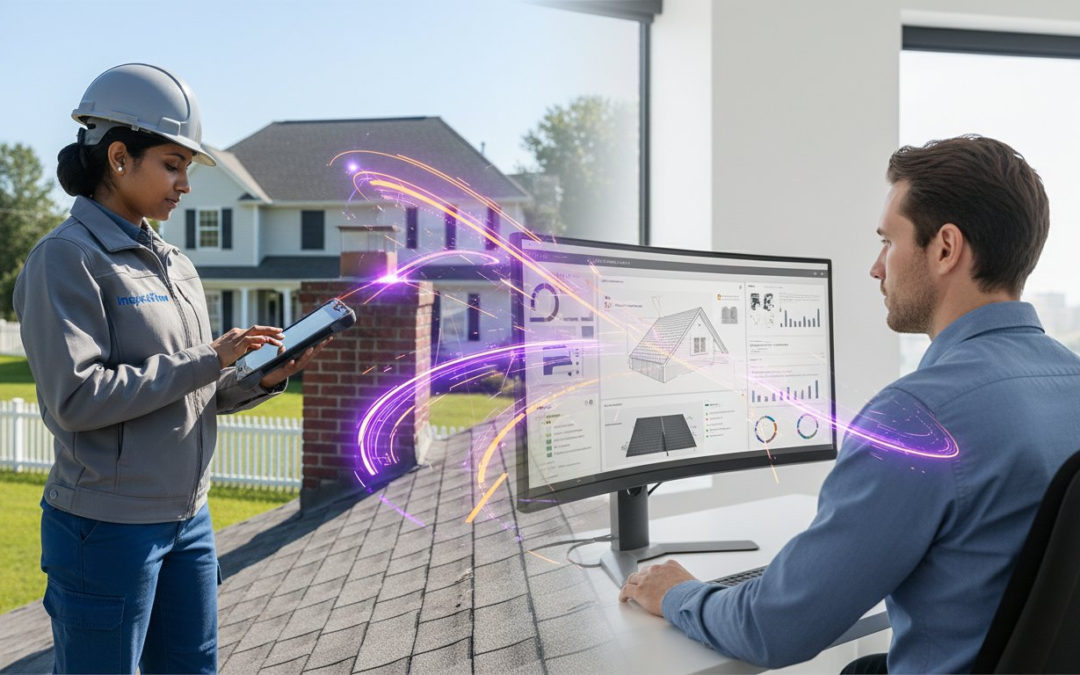
Did you know that coordination issues lead to an average 10% erosion in annual company profit margins? That is a massive price to pay for unlabeled photos and communication gaps. You’ve likely felt the sting of a field tech sending a batch of nameless images three days late, leaving your office staff to play a guessing game with manual data entry. It is a chaotic cycle that slows down your claim cycle times and frustrates your best people. You deserve a workflow that moves as fast as you do.
Effective team collaboration for field inspections isn’t about making more phone calls; it is about removing the friction of documentation through automated photo intelligence. This 2026 guide shows you exactly how to eliminate bottlenecks and sync your field and office teams instantly. You will discover how to implement mobile-first strategies that save inspectors an average of 1.78 hours every day. We will explore the tools you need for real-time visibility, instant report generation, and standardized inspection quality. Get ready to transform your documentation from a daily chore into a competitive advantage.
Key Takeaways
- Stop the profit bleed by identifying the hidden costs of manual photo labeling and delayed reporting.
- Revolutionize team collaboration for field inspections with real-time data syncing that connects your field techs to the office instantly!
- Deploy automated photo labeling to ensure every image is categorized, organized, and ready for review the moment it hits the cloud.
- Bridge the gap between the jobsite and the office by integrating field data directly with Xactimate and Verisk platforms.
- Build a scalable business using custom inspection templates and a centralized dashboard to guarantee standardized quality across every project.
The High Cost of Poor Team Collaboration for Field Inspections
Coordination issues aren’t just annoying; they’re expensive. Research from the Dodge Construction Network shows that coordination failures lead to an average 10% erosion in annual profit margins for contractors. In the high-stakes world of property assessment, team collaboration for field inspections is the difference between a profitable project and a total loss. True collaboration is more than a weekly meeting or a group chat. It is a real-time data sync that ensures the office sees exactly what the field tech sees, precisely when they see it.
Think about the “hidden” costs of your current workflow. Manual photo labeling and late reports create a massive administrative burden that drains your resources. McKinsey reports that organizations with world-class communication practices experience 20-25% higher productivity. When you rely on traditional methods like email or text for high-volume inspections, you’re building a graveyard for data. Photos get buried in long threads. Critical details get lost in translation. Documentation gaps lead to denied claims, project delays, and a mountain of manual data entry errors that your staff has to fix later.
The Documentation Bottleneck: Why Photos Stall Projects
Sorting through hundreds of unlabeled inspection photos is a productivity killer. It’s a tedious, manual process that keeps your best people chained to their desks instead of out in the field. When field teams lack a central sync, the risk of “lost” data skyrockets. This isn’t just an internal headache; it’s a direct threat to your professional reputation. Clients and carriers expect instant answers and standardized quality. If you can’t provide a clear, labeled report because a photo is stuck on an inspector’s personal phone, you’ve already lost their trust. Stop the sorting. Start the syncing. Protect your reputation with every click.
The Communication Gap Between Field and Office
Most firms suffer from information asymmetry where the office is 48 hours behind the field. This delay creates a vacuum of uncertainty. High-performing cross-functional teams require a single source of truth to stay aligned and move fast. Real-time dashboards solve the “where are we on this project” question instantly. Instead of chasing updates, your office team can monitor progress as it happens. Move to a visual-first collaboration model. Capture the image. Label the detail. Sync the data! This team collaboration for field inspections approach eliminates the lag and restores order to the chaos of onsite documentation.
4 Non-Negotiable Features of a Modern Collaboration Platform
Efficiency in 2026 requires more than just a digital version of a paper form. To truly master team collaboration for field inspections, you need a platform that actively removes work from your plate. Stop settling for generic file-sharing apps that leave your office staff drowning in unsorted data. You need a solution built for the rapid-fire pace of property assessment. A centralized Team Management Dashboard is your first requirement. It provides a high-level command center where you can track project progress, assign tasks, and monitor field activity without sending a single “status update” text. This oversight restores order and ensures no project falls through the cracks.
The second pillar is automated photo labeling. This feature ensures that every data point is usable the moment it hits the cloud. When photos arrive pre-labeled and categorized, your office team can begin the review process immediately. Combine this with custom inspection templates to standardize quality across your entire roster. Whether you are sending out a veteran or a new hire, templates ensure every inspector follows the same professional protocols. Finally, look for instant report generation. Closing the loop with clients shouldn’t take days. It should happen the moment the inspection ends. By leveraging automated photo intelligence, you can transform hours of administrative labor into seconds of automated output.
Automated Photo Intelligence: The Heart of the Workflow
Document while you shoot. Voice-to-text labeling allows your field teams to describe damage and findings hands-free. This is critical for large-scale property assessments where manual typing is too slow. Research shows that inspectors using mobile technology collect 2.75 times more information that is more complete and diversified. An instant sync feature then populates your office dashboard in real-time. The result? Your office staff can see exactly what is happening on-site before the inspector even climbs down from the roof. Capture, label, and sync!
Standardizing Excellence with Custom Templates
Consistency is the backbone of a scalable business. Custom templates act as a digital blueprint for your team. They reduce the need for costly re-inspections by ensuring every required photo is taken and every detail is noted the first time. Use a custom report builder to adapt your workflow for different inspection types, from residential roofs to commercial interiors. This flexibility allows you to maintain peak performance across every niche you serve. Empower your team, standardize your results, and scale your operations with confidence.
Bridging the Gap: Integrating Field Data with Claims and Estimates
Field data only matters if your estimators can use it. Don’t let your documentation become a digital dead end. High-performance team collaboration for field inspections requires a seamless flow of information from the jobsite directly into industry-standard platforms like Xactimate and Verisk. When your field team captures a photo, it shouldn’t just sit in a folder. It needs to be the evidence that justifies every line item in your estimate. Collaborative software ensures your data meets rigorous IICRC documentation standards, providing the defensible proof required for complex restoration and mitigation projects. Capture the damage, categorize the findings, and close the claim!
Many professionals worry about whether new tech will “play nice” with their current stack. This is the primary hurdle for firms looking to scale. The answer is simple: modern tools are designed to be the bridge, not the barrier. By combining aerial roof and wall measurements with pre-labeled photo reports, you provide estimators with a complete property picture. This isn’t just about speed; it’s about total accuracy. When the data is standardized and organized, the friction between field and office disappears. You stop wasting time on manual uploads and start focusing on high-value assessments that drive revenue. It’s time to replace the “manual shuffle” with a streamlined digital pipeline.
The Role of Virtual Inspection Software
Stop wasting time on unnecessary “truck rolls.” Virtual inspection software allows your senior adjusters to provide expert oversight without leaving the office. They can guide junior field staff through a project in real-time, ensuring no critical detail is missed. This remote assessment model saves thousands in fuel and labor costs while maximizing your existing talent. With a centralized team management dashboard, you can monitor multiple sites simultaneously, providing a level of virtual oversight that was impossible just a few years ago. See the site, sync the data, save the day!
Supporting the Claims Cycle with Precise Documentation
Speed up your approvals and eliminate the back-and-forth with carriers. Automated photo labeling is the secret weapon for reducing claim cycle times. When an adjuster receives a report that is already categorized and clearly labeled, the review process moves significantly faster. Incorporate moisture mapping and aerial data to present a bulletproof case for every file. As Ken Perry, “The Claims Coach,” often emphasizes, documentation is a strategic asset, not just a clerical task. Precise documentation protects your profit margins and keeps your clients happy. Team collaboration for field inspections isn’t just a workflow; it is a financial strategy. Don’t just record the damage; prove the story with every pixel.
How to Implement a Collaborative Inspection Workflow in 5 Steps
Audit your mess to find the gold. Most firms lose hours every week to “dead time”, that frustrating period between finishing an inspection and actually delivering the report. To master team collaboration for field inspections, you must bridge this gap with a structured rollout. It isn’t just about downloading an app; it’s about changing how your team thinks about data. Follow these five steps to turn your field operations into a high-velocity engine of productivity. Stop the guessing. Start the syncing. Scale your impact!
Step 1: Audit Your Current Communication Friction
Stop the data leaks immediately. Identify exactly where your information goes to die. Is it buried in text threads, trapped on memory cards, or lost in a flurry of unsorted emails? Map the journey of a single inspection photo from the jobsite to the final report. If that journey takes more than 10 minutes of human effort, you have a documentation bottleneck. Set clear KPIs for report turnaround times. Aim for “instant” rather than “eventually.” When you quantify the friction, you can finally eliminate it.
Step 2: Deploying the Technology to the Field
Deploy your tools with a “fast-start” approach. Don’t overwhelm your team with a week of training. Instead, demonstrate the power of automated photo labeling during a live walk-through. When field techs see their voice transform into organized, labeled data in real-time, the “buy-in” is immediate. Set up your Team Management Dashboard to provide the office with instant notifications of completions. This creates a culture of accountability where the office knows exactly when a project is ready for review. No more chasing status updates!
Standardize your results by building custom mobile templates for every inspection type you handle. This ensures your data is uniform, regardless of who is in the field. It prevents the dreaded “I forgot that photo” phone call that forces a second trip to the site. Next, kill the “second shift.” Train your teams to use voice-to-text labeling while they walk the property. This eliminates the night-time office work where inspectors spend hours typing up notes from memory. Finally, optimize your engine. Use your dashboard metrics to analyze inspection speed and performance. Find your top performers, replicate their habits, and scale your success with confidence!
Scale Your Business with PHOTO iD’s Team Management Tools
Stop fighting the friction. You have seen the high cost of poor communication and the specific steps needed to fix it. Now, you need the engine to drive that change. PHOTO iD isn’t just another app on your phone. It is a game-changing partner designed to restore order to the chaos of onsite documentation. While competitors focus on complex, manual forms, we focus on the visual truth. We simplify team collaboration for field inspections by turning every photo into a smart, pre-labeled data point the moment it is captured. Capture, categorize, communicate!
The Power of the Dashboard
Take command of your operations from a single screen. The centralized Team Management Dashboard is your ultimate control center. Manage multiple inspectors, track dozens of projects, and monitor field activity in real-time. This visibility prevents project delays because you see the results the second they hit the cloud. No more waiting for end-of-day uploads. No more wondering if the job is actually done. This level of oversight improves accountability and ensures your standards are met on every site. See the software in action. Watch your documentation bottlenecks vanish instantly.
Why PHOTO iD is the Pro’s Choice
Expertise is built into our DNA. PHOTO iD was born from the legacy of Ken Perry and U.S. Pro-Adjusters, LLC. We understand the daily grind of the specialized labor and assessment industries because we’ve lived it. Our primary differentiator is total automation. We don’t ask you to type; we ask you to talk. Our voice-to-text labeling and instant photo report generation turn hours of administrative labor into seconds of effortless output. This is the professional’s choice for a reason. It is fast. It is reliable. It is built for scale.
Save your hours. Secure your payments. Send professional-grade reports that carriers and clients respect. Don’t let your competition outpace you with better technology. Take control of your documentation and empower your team to perform at their peak. Start your team subscription today and experience the future of field efficiency. Capture, categorize, communicate!
Take Command of Your Field Operations
Stop letting documentation bottlenecks erode your profit margins. You now have the roadmap to eliminate friction, standardize quality, and bridge the gap between site and office. Mastering team collaboration for field inspections is about more than just better communication; it is about deploying the right intelligence to the field. By utilizing automated photo labeling, you can save 2 or more hours on every report while providing instant delivery to your clients. There is no reason to spend your nights sorting through nameless images when the technology exists to do it for you.
This platform wasn’t built in a vacuum; it was designed by industry veteran Ken Perry, also known as “The Claims Coach,” to solve the exact frustrations you face every day. The tools are ready. The process is clear. The results are immediate! You have the power to transform your workflow from a source of stress into a source of strength. Empower your team with PHOTO iD today and restore order to your onsite documentation. Build your legacy on efficiency and scale your business with total confidence!
Frequently Asked Questions
What is the best way to manage field inspection photos for a team?
The most efficient way to manage photos is through a centralized, cloud-synced photo organization app. Stop relying on scattered emails and text threads that lose data. A dedicated system ensures every image is captured, labeled, and stored in one secure location accessible to your entire team. This approach streamlines team collaboration for field inspections by providing instant visibility into site conditions. Capture! Sync! Scale!
How does automated photo labeling improve team collaboration?
Automated photo labeling removes the guesswork from documentation by tagging images the moment they are taken. It creates a shared language between the field and the office. When your office staff receives pre-labeled photos, they can begin reviewing claims immediately without chasing inspectors for descriptions. This automation restores order, reduces errors, and keeps your projects moving forward at peak velocity!
Can field inspection software integrate with Xactimate or Verisk?
Yes, professional-grade inspection tools are built to integrate seamlessly with industry standards like Xactimate and Verisk. This connectivity ensures that your field data flows directly into your estimates without manual re-entry. By bridging this gap, you eliminate the friction between assessment and settlement. It’s about building a digital pipeline that supports faster approvals and more accurate reporting for every file.
How do I ensure all my inspectors follow the same reporting standards?
Deploy custom inspection templates to mandate consistency across your entire roster. Templates act as a digital checklist that guides inspectors through every required step of the process. This ensures that even junior staff produce professional-grade reports that meet your high standards. Standardizing your workflow reduces the need for costly re-inspections and guarantees a uniform quality that clients can trust on every project.
What are the benefits of a real-time team management dashboard?
A real-time dashboard provides a command center for your operations, allowing you to track project progress and inspector locations simultaneously. It eliminates the need for constant status update phone calls. You gain immediate oversight, improved accountability, and the ability to identify bottlenecks before they stall your schedule. Monitor your team, manage your projects, and maximize your output with total clarity!
Will using an inspection app slow down my field staff?
Modern mobile technology actually speeds up your staff by saving an average of 1.78 hours per day per inspector. While there is a brief learning curve, the elimination of manual photo sorting and night-time report writing creates massive time savings. Your team can focus on the physical assessment while the app handles the administrative burden. Capture the data, sync the report, and move to the next job.
How can voice-to-text labeling help office staff process reports faster?
Voice-to-text labeling allows field teams to dictate notes while they work, which populates reports with rich, accurate data instantly. This means your office staff doesn’t have to decipher messy handwriting or wait for inspectors to type up notes later. It accelerates team collaboration for field inspections by delivering professional descriptions alongside every photo. Clearer data leads to faster processing and significantly reduced claim cycle times!
Is there a way to remotely oversee field inspections in real-time?
You can oversee onsite activity through virtual inspection software and live team management dashboards. These tools allow senior adjusters to view uploaded data in real-time or guide field staff through complex assessments remotely. This remote oversight reduces the need for expensive truck rolls and allows your most experienced talent to manage multiple sites from the office. See the site, sync the data, save the day!